It didn’t start with you but
you can break the cycle.
Therapy for childhood trauma in NYC
& across NY
You’re an (over)achiever who’s always tried to do the right thing, but there’s often a sense of “not good enough” that keeps popping up. It happens at work, with your family, and in your friendships.
It’s hard to talk about, but you’ve carried a sense of shame for as long as you can remember.
Your inner critic is strong. You’re really good at beating yourself up and feeling responsible - for everything.
No matter what you do, you always feel like the black sheep of your family. You can never quite escape their judgement.
And, you can never stop judging yourself either.
The cycle is exhausting - but you don’t know how to stop.

Would you be surprised to learn that these are all signs of what’s called developmental trauma or Complex PTSD (C-PTSD)?
Developmental trauma is a form of childhood trauma that emerges from repeated patterns of mistreatment or neglect. Often thought of as “invisible” trauma, many people don’t realize that verbal abuse, intense criticism, and an unpredictable environment can really affect your mental health.
My clients often don’t recognize the scars left by childhood trauma because they associate “trauma” with particularly awful events (like a car accident or a rape or physical harm). You may point out all the ways your parents loved and cared for you (“I had everything I needed” you might say), but you may also be aware of a sense that something was always missing.
You may say that “it wasn’t so bad,” even though you have lots of memories of living in fear of family members, always worried that you might be yelled at, spanked, or criticized.
It wasn’t about what happened but what didn’t happen - you don’t remember many (or any) moments of support, gentleness or patience.
As an adult, you find your purpose and satisfaction through helping others, but you often neglect yourself in the process. You stay small and second guess your impulses and desires because you never learned to trust yourself in that unstable world where you grew up.
You ignore your feelings like they were ignored by others during your childhood.
You grew up without a true sense of security and belonging. That can show up as anxiety, depression, feelings of unworthiness, and shame today.
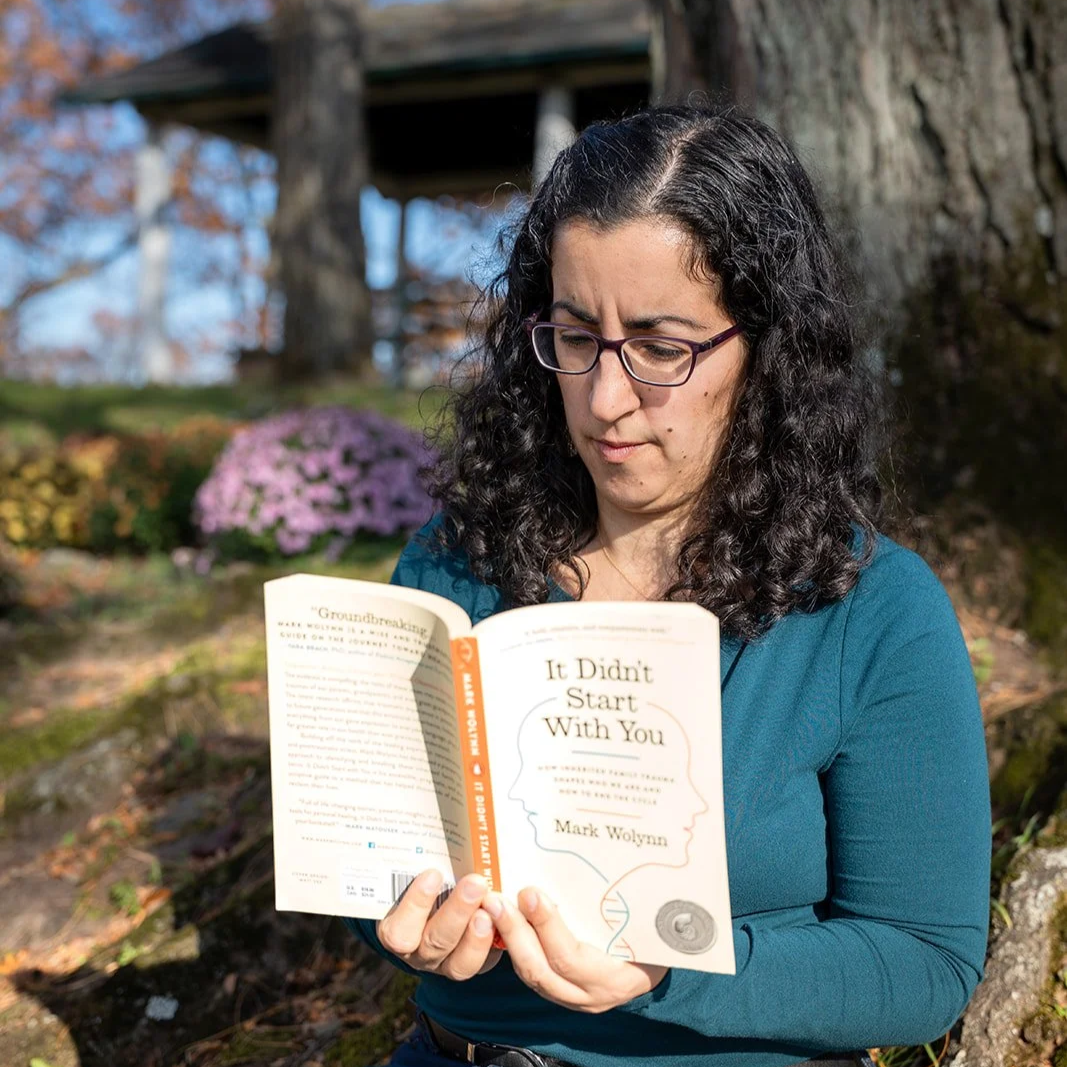
What is intergenerational trauma therapy?
In addition to the events of your own childhood, your family’s history and legacy also shapes who you are today.
The weight of what your family (parents, grandparents, and even further back) survived still affects your life. Events like the Holocaust, slavery, forced or voluntary migration, religious persecution and so much more can have a trickle-down effect into the generations that follow.
The effects of intergenerational trauma can show up in so many ways: how you act in relationships, how you parent, how you process or ignore your emotions, what you believe about work and safety and money and so much more.
This response is often called intergenerational trauma. Your feelings and experiences are shaped by those who came before you and by what has been passed down to you.
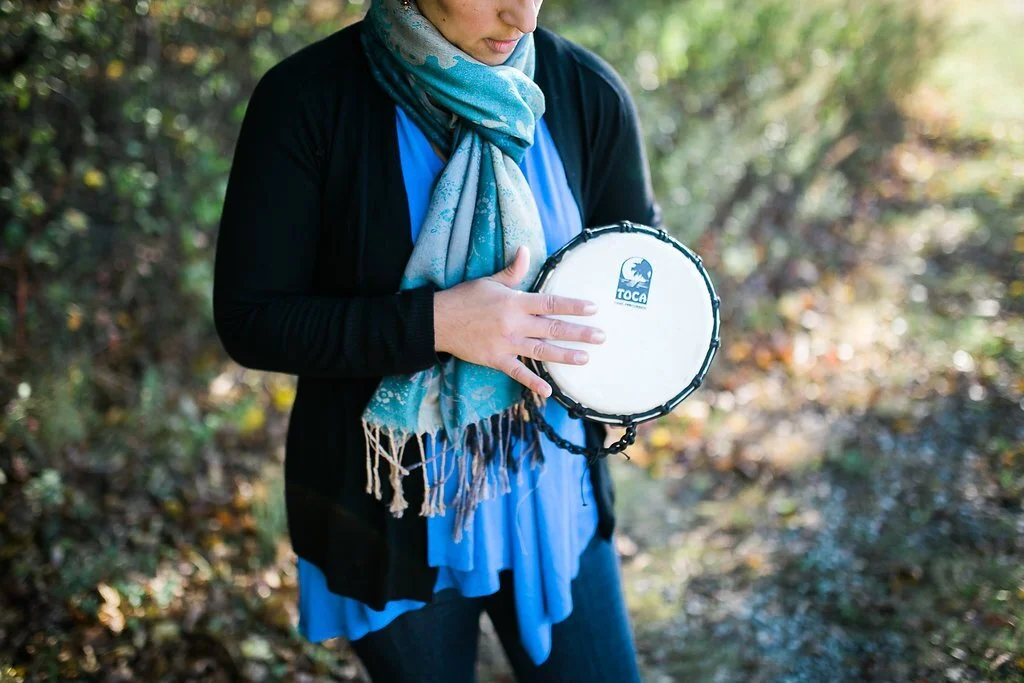
Music Therapy Helps You Heal from Childhood & Intergenerational Trauma
Trauma robs you of your capacity to be playful. Trauma makes you feel stuck in “black or white” thinking and feeling, always ready to respond to the next danger or threat (your nervous system can’t tell the difference between harsh criticism or a tiger and keeps you stuck in fight or flight).
If your trauma comes from difficult childhood experiences, you may find it hard to improvise and be flexible in the face of adversity and stress.
Music therapy is inherently playful and creative. Finding songs that express all of your feelings and improvising with sound invites a sense of lightness, ease, and possibility into your healing process.
Music therapy can also help you feel grounded and calm (which may feel all too rare for you).

Music therapy for childhood trauma can help you explore and express all your feelings
Working together can help you move beyond just “living in your head” and offers new ways to feel comfortable in your body and with the full range of your emotions. This approach to therapy offers a unique, powerful way to work through issues related to negative self image, self-judgement, and shame.
When you incorporate music into therapy for childhood trauma, you discover new ways to explore and express all your feelings.
You may be used to living within the limits of what you were allowed to feel or share as a kid.
Part of recovering from childhood trauma relies on allowing yourself to experience your responses to what happened (and to what might still be happening) to you. It means learning to understand and trust your feelings, without being overwhelmed or ignoring them.
Allowing yourself to experience and fully express the anger, sadness, grief, loss, confusion, and the push and pull relationship dynamics that have been with you throughout your life, opens you to find a sense of authentic freedom.
You can make your own kind of peace with your family and with your past so you can move into the future with a greater confidence and a deep love for all that you are.
Trauma Therapy NYC & NY FAQs
-
Living in New York City can easily be overwhelming. Constant stimulation, pressure, comparison, long work hours, and the feeling that you always need to keep up can leave your nervous system stuck in survival mode.
Trauma therapy can help you better understand the impact of your childhood experiences while also helping your body learn how to feel safer, calmer, and more grounded now.
In our work together, we may explore patterns like overthinking, perfectionism, people pleasing, burnout, panic, chronic stress, or difficulty slowing down.
As an trauma therapist in NYC, I offer a warm, relational, and embodied approach that goes beyond just managing symptoms. Together, we can work toward helping you feel more regulated, connected, and able to move through life with greater ease and self-trust.
-
My approach to trauma therapy is warm, collaborative, creative, and grounded in nervous system awareness.
I will never force you to share anything before you’re ready - and actually, moving slowly is a vital part of this process. We’ll figure out the pace that works best for you and your nervous system - no cookie-cutter, vanilla therapy here!
Sessions often include a blend of talk therapy, mindfulness, body awareness, creative exploration, and nervous system regulation tools. As a licensed creative arts therapist and music therapist, I may also incorporate music, imagery, breathing, or other experiential approaches when it feels supportive and aligned with your needs.
Many clients tell me they appreciate having a space where they don’t have to perform, push through, or have everything figured out. Trauma therapy with me is not about “fixing” you - it’s about helping you feel safer, more connected to yourself, and less alone.
-
Insight is important, but insight alone does not always create change.
Many people come to trauma therapy with a lot of insight. They may understand their family dynamics, attachment patterns, perfectionism, or trauma history on an intellectual level - but still feel stuck in the same emotional and physical cycles.
This often happens because difficult experiences don’t only live in your thoughts and memory. They also live in the nervous system and the body. Healing usually requires more than awareness alone.
It involves creating new emotional experiences, building safety within yourself, and learning how to relate differently to stress, fear, and overwhelm.
My approach integrates insight with embodied and experiential work so that therapy helps you actually feel different in your day to day life.
-
My approach to trauma therapy combines traditional psychotherapy with creative arts therapy, music therapy, mindfulness, and embodied nervous system work.
Many people who experienced childhood trauma (C-PTSD) spend a lot of time in their heads - analyzing, anticipating, overthinking, or trying to intellectually solve their emotions. While insight can be helpful, lasting healing often requires more than talking.
I work in a way that is relational, experiential, and deeply compassionate. Depending on your needs, sessions may include mindfulness practices, body awareness, creative exploration, guided music experiences, or nervous system regulation tools alongside talk therapy.
I also believe therapy should feel human and authentic. You do not need to arrive perfectly articulate or “good at therapy.” My goal is to create a space where you can soften out of survival mode and reconnect with yourself in a more authentic and grounded way.
-
Not at all! You do not need any musical background, talent, or experience to benefit from music therapy.
Music therapy is not about performing or being “good” at music. It is a therapeutic process that uses music intentionally to support emotional expression, nervous system regulation, self-awareness, and healing.
Some sessions may include listening to music, guided imagery, improvisation, or using music for grounding and relaxation. Other sessions may not involve music at all. Everything is collaborative and tailored to your comfort level and needs.
Many people are surprised by how accessible and supportive music therapy can feel, especially for anxiety, stress, and emotional overwhelm.
-
You may be someone who constantly pushes yourself, struggles to rest, overthinks interactions, or feels responsible for everyone else’s needs. Often, childhood trauma can go unnoticed because externally things may look fine - even while your nervous system is under significant strain.
Trauma therapy can help you better understand your patterns while creating more capacity for self-compassion, boundaries, emotional regulation, and a greater sense of ease (and joy!) in your daily life.
-
Yes. I offer online trauma therapy for adults located anywhere in New York State, as well as in-person trauma therapy sessions in NYC.
Online therapy can be a supportive and effective option for people with busy schedules, demanding work lives, caregiving responsibilities, or those who live far from my NYC office. Many clients appreciate being able to access therapy from the comfort and privacy of their own space.
Whether we meet virtually or in person in NYC, my approach remains the same - warm, collaborative, and grounded in helping you feel more supported, connected, and regulated.
-
First step is to schedule your free 20 minute intro call here.
This call will give us a chance to talk about any questions you may have & see if we’d be a good fit to work together!
If it feels like a good fit, we can schedule your first trauma therapy session on the phone together.
I look forward to connecting you with you!